
Industry: Renewable Energy / Solar PV
Location: White Rock, British Columbia, Canada
Scope : Electrical engineering design, structural feasibility coordination, rooftop layouts, permit support, and approved-for-construction drawing package for two rooftop solar installations
Software: AutoCAD and engineering drafting/design workflows

Turning rooftop solar ambition into a permit-ready, buildable design
The client set out to advance rooftop solar installations across two buildings in White Rock, BC. To move from concept to construction, the project required more than panel placement, it needed a coordinated electrical and structural engineering approach that could support technical review, permit submission, and field execution.
Because rooftop solar design sits at the intersection of building constraints, electrical integration, and code compliance, the client needed a partner who could align feasibility, detailed design, and documentation into one dependable workflow.
The Objective
Deliver a complete electrical engineering concept that could move confidently into construction
The goal was to develop a robust engineering package for two rooftop solar installations covering concept development, detailed electrical design, and supporting structural feasibility so the client could proceed with confidence toward construction and permitting.
An engineering partner that connects concept, compliance, and constructability
The client engaged Prozus for our ability to bring together electrical engineering, drafting, quality control, and cross-discipline coordination in a single delivery model. Rather than treating design as a set of isolated drawings, we approached the project as an integrated engineering solution – one that balanced rooftop realities, system performance, and permit-readiness from the outset.
This combination of technical rigor and practical execution helped ensure the final deliverables were not only technically sound, but also usable by stakeholders responsible for review, approval, and construction.
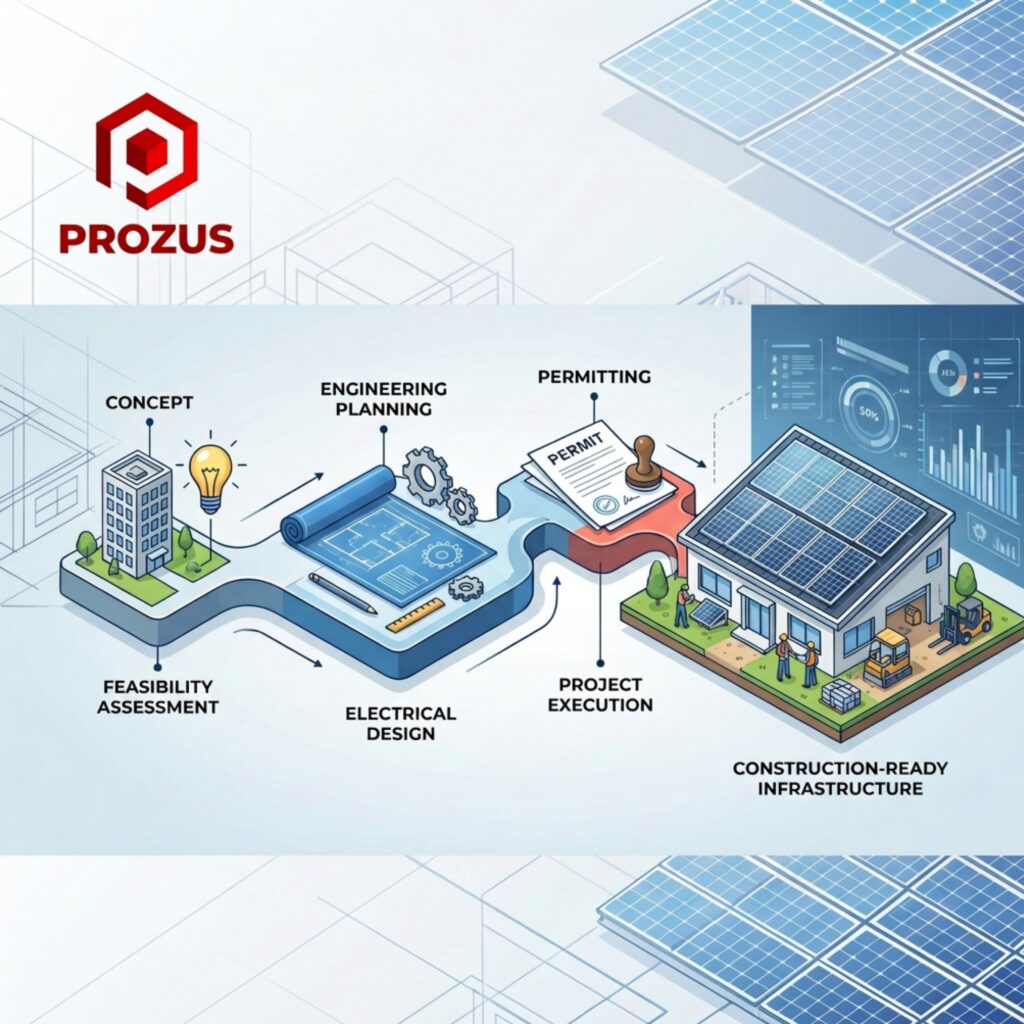
Phase 1: Feasibility, data review, and concept development
Prozus began by reviewing available project information and defining the engineering path forward for two rooftop solar installations. The early phase focused on building a dependable design foundation – capturing rooftop conditions, reviewing as-built information, and aligning structural and electrical considerations before detailed design advanced.
Phase 2: Detailed electrical engineering and construction documentation
With the technical basis established, Prozus advanced the design into a complete engineering package. This included the core electrical documentation needed to support installation planning, review, and field execution while maintaining alignment with structural requirements and permit needs.
From concept to approved-for-construction drawings
Prozus successfully translated the client’s rooftop solar vision into a practical engineering package for two buildings in White Rock. The final deliverables provided the technical clarity needed to move the project forward supporting both execution in the field and review by permitting stakeholders.
The completed project culminated in stamped engineering drawings approved for construction, helping enable building permit obtainment and giving the client a reliable foundation for rooftop solar installation.
A repeatable model for solar engineering delivery
This project demonstrates how a coordinated engineering workflow can reduce friction between concept, design, and permitting for rooftop solar initiatives. By integrating electrical design, structural coordination, drafting, and quality control, Prozus helped create a repeatable model that can be applied to future solar projects with similar speed, clarity, and discipline.
Engineering that helps clean energy move faster
In renewable energy projects, momentum depends on more than intent – it depends on deliverables that are technically sound, clearly documented, and ready for real-world use. This engagement reflects Prozus’ ability to support that momentum through engineering packages that bridge feasibility, compliance, and constructability. For clients pursuing rooftop solar, that means fewer gaps between vision and execution and a smoother path to installation.