Industrial projects are becoming increasingly complex, requiring more accurate and data-driven decision-making than ever before. This is where advanced 3D modeling services and digital twin technologies are transforming how facilities are designed, maintained, and optimized.
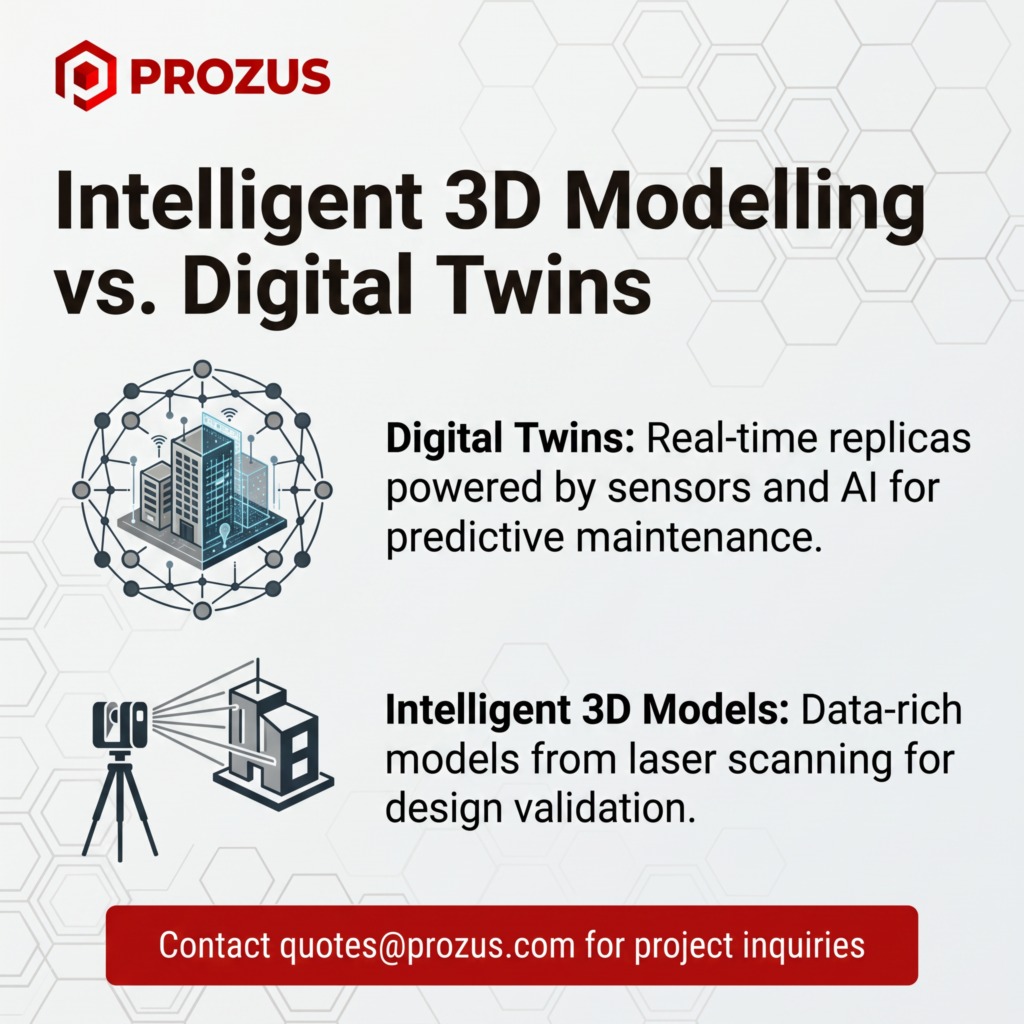
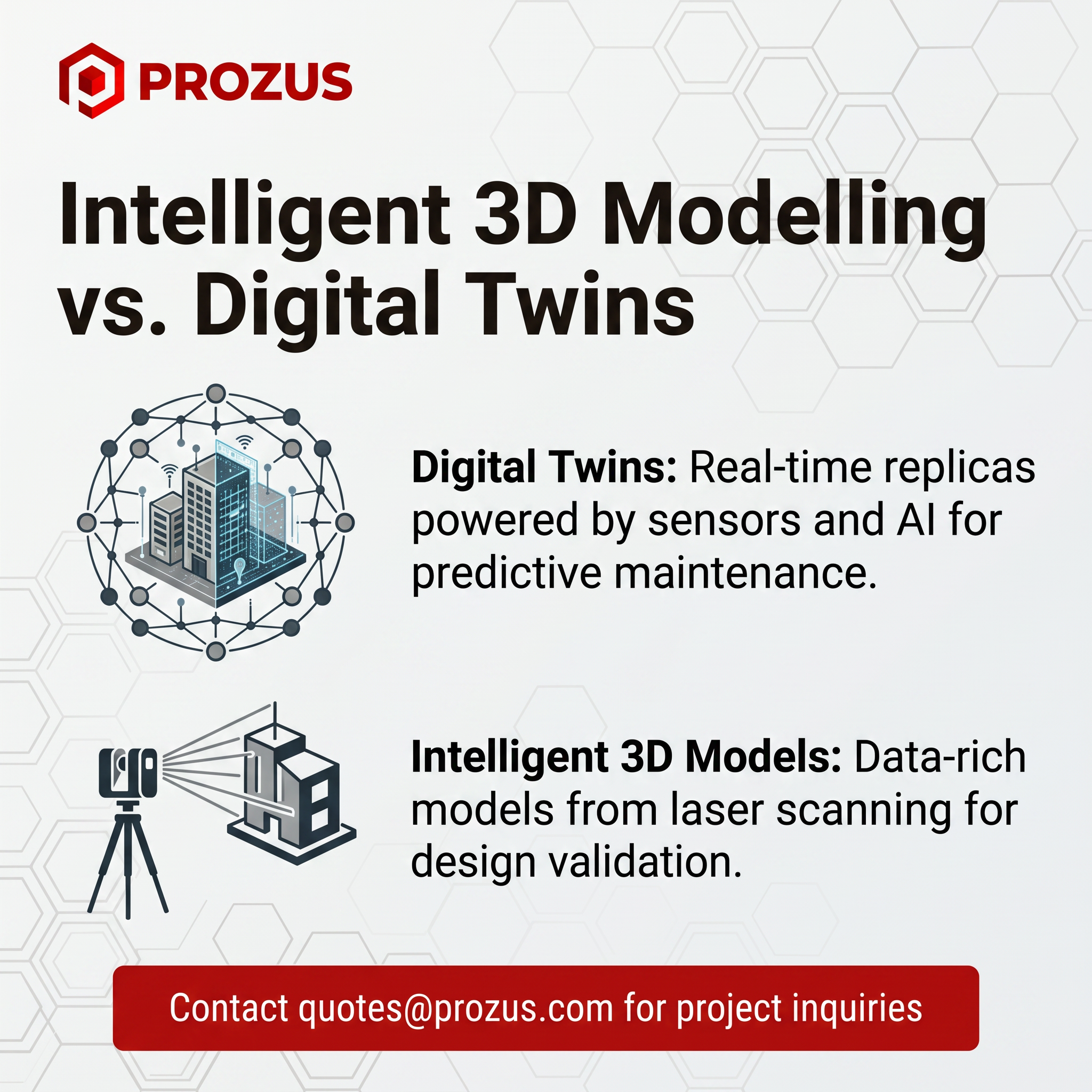
Digital twins are one of the most advanced applications of this shift. These systems use real-time data from sensors, control systems, and operational inputs to continuously update digital replicas of physical assets. While the upfront investment can be significant, digital twins often deliver substantial long-term value by enabling performance monitoring, scenario simulation, and the prediction of costly failures before they occur.
Artificial intelligence is a major driver behind this evolution. By combining AI with digital twins, companies can analyze real-time data to detect patterns, identify anomalies, and recommend optimizations. This allows industrial facilities to better plan maintenance, reduce downtime, and make informed decisions with confidence.
However, digital twins are not always the most practical solution—especially for older or brownfield facilities. In many cases, companies instead rely on intelligent 3D modeling for engineering, which provides a highly effective and more cost-efficient alternative.
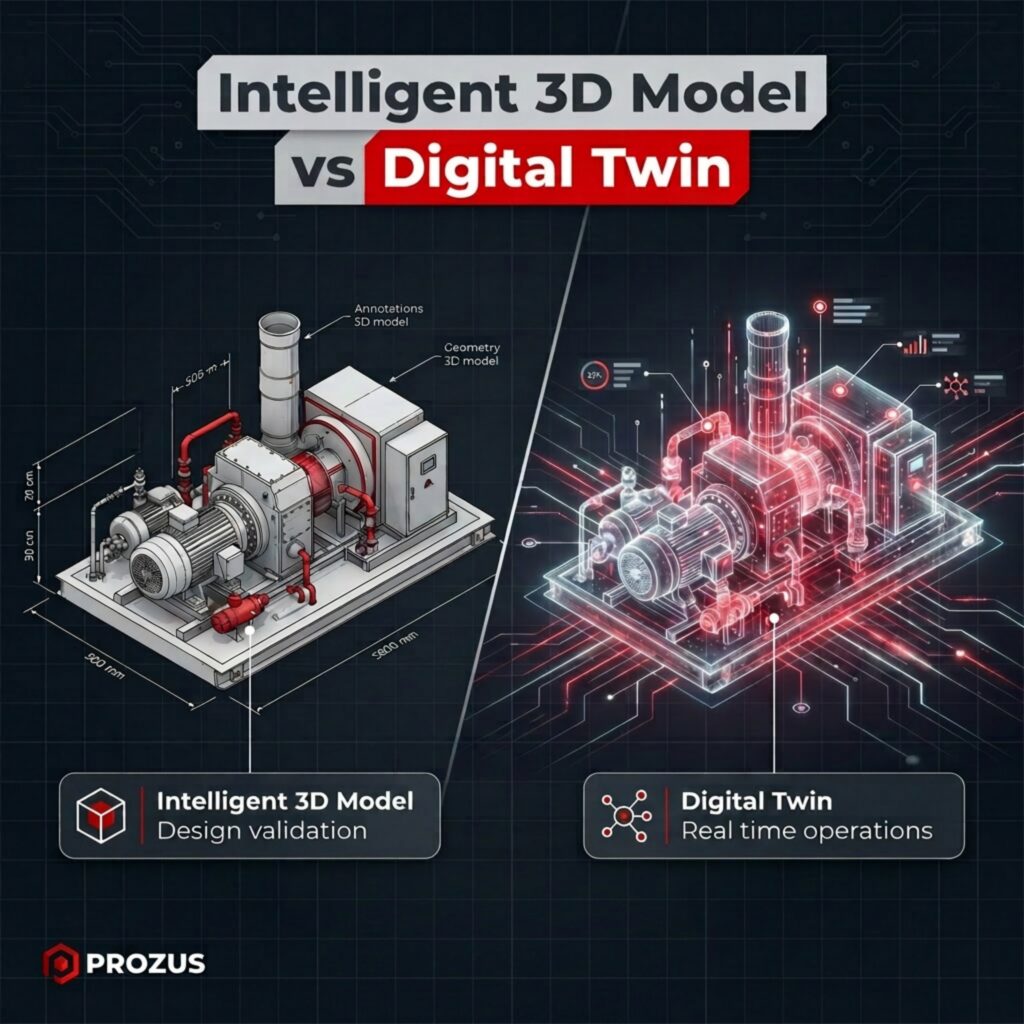
An intelligent 3D model is a detailed, data-rich representation of a facility that supports design, coordination, and execution. These models include key information such as dimensions, materials, and specifications, making them essential tools in modern 3D modeling in engineering workflows.
A digital twin goes a step further by integrating live operational data, creating a continuously updated replica of the physical asset. In simple terms, an industrial 3D model supports project delivery, while a digital twin supports ongoing operations and performance optimization.
For many industrial projects—particularly retrofits and upgrades—accurate existing conditions are critical. In brownfield environments, outdated drawings are one of the leading causes of design conflicts and field rework.
By using 3D modeling services supported by reality capture technologies, teams can work from precise, up-to-date information. This improves coordination across disciplines, reduces risk, and helps prevent costly errors before construction begins.
To create these models, 3D laser scanning services—also known as industrial 3D scanning services—are used to capture millions of data points from existing facilities in a matter of hours. This process enables the creation of highly accurate digital representations, even in complex or hazardous environments.
The result is a reliable, data-rich industrial 3D model that serves as a single source of truth for design, planning, and execution.
The integration of intelligent models, laser scanning, and AI-driven digital twins is fundamentally changing how industrial projects are delivered. Instead of relying on outdated drawings or assumptions, teams can make decisions based on accurate, real-time data at every stage of the project lifecycle.
Prozus provides end-to-end 3D modeling services, from on-site data capture using advanced scanning technologies to the development of intelligent models for design, retrofits, and full facility upgrades. With the ability to scale across large industrial projects, Prozus helps clients model entire facilities quickly and accurately while reducing costs and project risk.
If you have an upcoming modeling project, reach out to learn how intelligent 3D modelling can support faster, safer, and more efficient project delivery.