
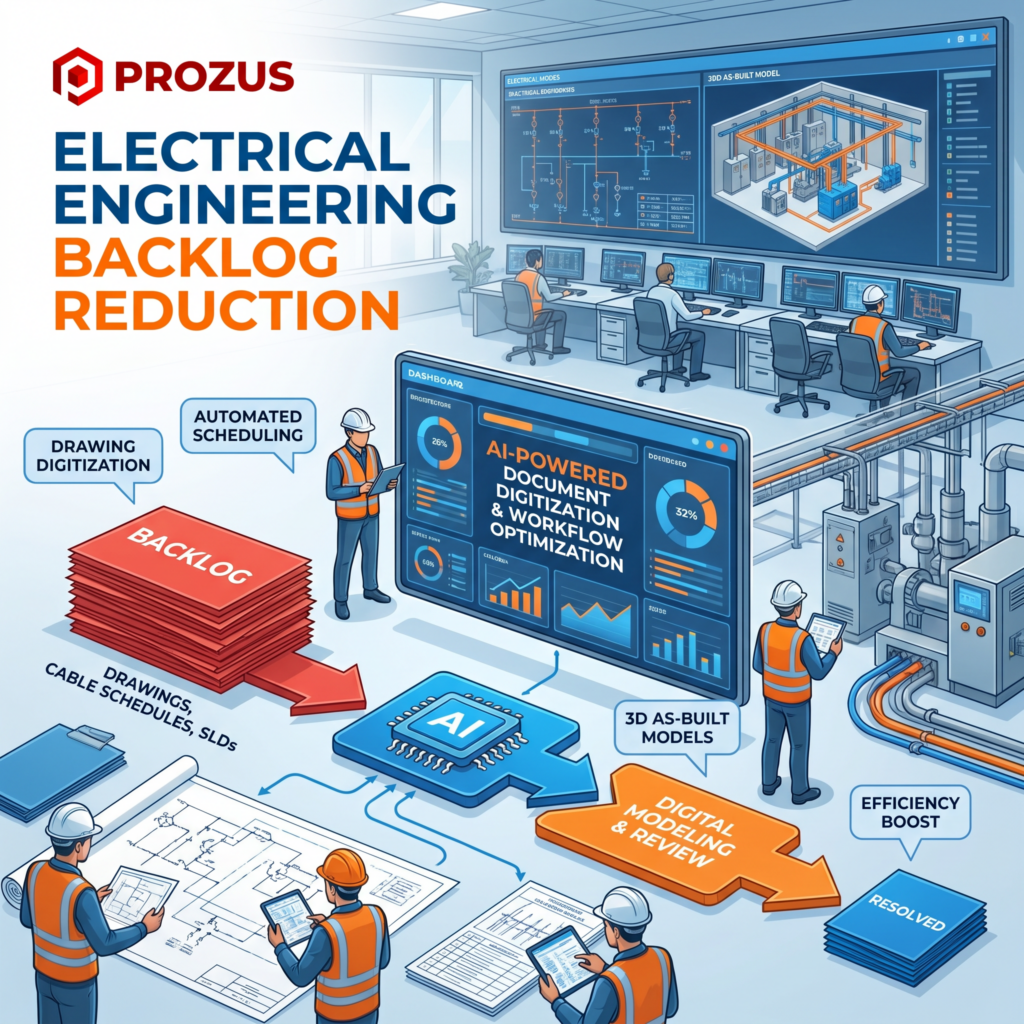
Electrical engineering backlogs are one of the most common and costly challenges facing midstream, oil and gas, and industrial companies today. With aging infrastructure, constant facility upgrades, and growing regulatory demands, many electrical teams are drowning in as builts, redlines, single line diagrams, cable schedules, and project deliverables.
If your team is consistently behind, you are not alone. The good news is that there are proven strategies to reduce these backlogs effectively without hiring more full-time staff.
Left unchecked, backlogs lead to project delays, higher costs, compliance risks, and frustrated teams.
7 Proven Ways to Reduce Electrical Engineering Backlogs
1. Prioritize Ruthlessly Not all drawings are equally urgent. Work with operations and project teams to categorize deliverables by criticality such as safety, regulatory, and production impact. Focus first on items that block construction or audits.
2. Implement Fixed Price Outsourcing One of the fastest ways to clear backlog is partnering with a specialized engineering support firm. Fixed price deliverables remove the uncertainty of hourly rates and allow you to scale capacity quickly when needed.
3. Leverage AI Powered Document Digitization Modern AI tools can dramatically accelerate the process of organizing, renaming, sorting, and verifying legacy electrical drawings. Instead of weeks of manual work, AI can process thousands of drawings in days while flagging missing or outdated revisions.
4. Use 3D Modelling for Faster Design Creating or updating designs in 3D significantly reduces errors and rework. Good 3D models also improve coordination with other disciplines and make future modifications much easier.
5. Standardize Templates and Processes Develop standardized templates for single line diagrams, cable schedules, MCC layouts, and grounding drawings. Consistency reduces drafting time and improves quality.
6. Bring in Overflow Support During Peak Periods Instead of hiring permanent staff for temporary workload spikes, partner with an experienced overflow provider. This gives you immediate capacity without long term overhead.
7. Combine Field Walkdowns with Smart Technology Accurate as builts require quality field data. Pairing experienced walkdown teams with digital tools and AI verification creates faster, more reliable deliverables.
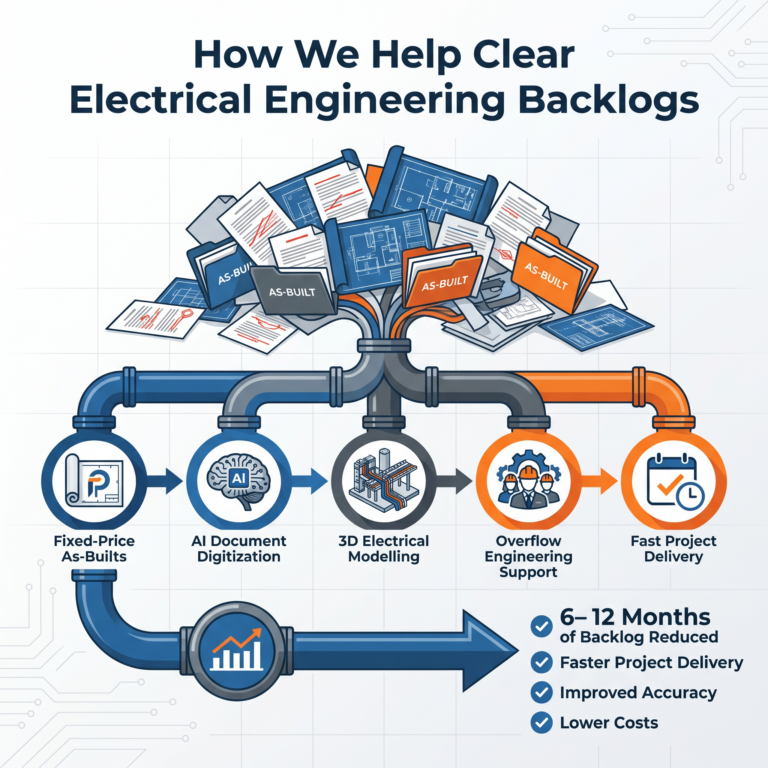
At Prozus, we specialize in helping overloaded electrical teams across Western Canada and the United States. Our clients including major operators like Enbridge, Trans Mountain, and TransAlta use us to:
Because we operate a hybrid model with teams in Calgary, Houston, and Chennai, we can deliver North American quality and stamping at 30 to 70 percent lower cost than traditional EPC firms.
Many of our clients clear 6 to 12 months of backlog within just a few months of working with us.
Electrical engineering backlogs do not have to be a permanent headache. By combining better prioritization, smarter tools, and strategic outsourcing, you can dramatically improve delivery times while controlling costs.
If your team is currently overwhelmed with electrical drawings, as builts, or design deliverables, Prozus can help lighten the load quickly and cost effectively.